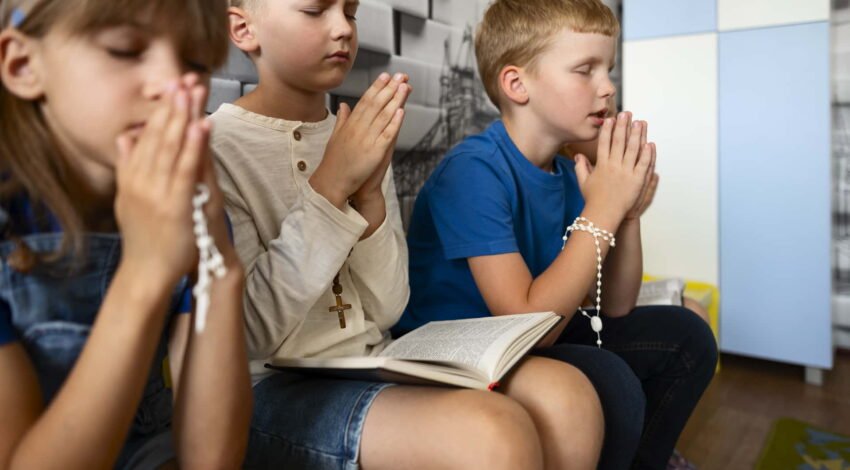
Introduction: Innocence Meets Eternal Damnation
Imagine you’re five years old. You’re still afraid of the dark.
But instead of being told that monsters aren’t real, you’re taught that if you’re not good, you’ll be burned alive forever.
Not just you—but your friends, your grandparents, and billions of people.
This is not parenting. It’s not spiritual education.
It’s trauma disguised as truth.
Let’s break down how religious indoctrination deeply affects a child’s psychology—and why it’s time we stopped calling this “love.”
1. The Fear of Hell: A Lifetime of Anxiety
Hell is one of the most traumatizing ideas ever introduced to the human mind—especially a developing one.
Children are told:
- God loves you… but will send you to burn forever if you lie or doubt.
- Your friends will suffer in agony unless you convert them.
- Every thought you think is being watched and judged.
Richard Dawkins called this “a form of mental abuse.” And he’s right.
This creates existential anxiety before a child even understands death.
Nightmares. Guilt. Panic attacks. Constant surveillance from an invisible judge.
No five-year-old should be worrying about eternal damnation.
2. Indoctrination Replaces Critical Thinking
In religious settings, children are often taught what to believe—not how to think.
- “The Bible says it, so it’s true.”
- “Don’t question God.”
- “Doubt is the devil speaking.”
This teaches blind obedience. Not exploration.
“Curiosity is the engine of intellectual achievement. Children should be encouraged to question everything.” – Neil deGrasse Tyson
But when questioning is punished, critical thinking dies—and with it, autonomy and curiosity.
3. Shame Around Sex and the Body
Religious guilt doesn’t stop at thoughts and beliefs—it sinks into your skin.
- Masturbation? Sinful.
- Sex before marriage? Disgusting.
- LGBTQ+? Abomination.
Children internalize these messages before they can fully understand sexuality.
They grow up believing their natural urges are evil.
This leads to:
- Repression
- Self-loathing
Inability to form healthy sexual relationships
Sam Harris once said: “Your principal concern appears to be that a Creator of the universe will take offense at something people do while naked.”
4. Religious Trauma Syndrome Is Real
Coined by Dr. Marlene Winell, Religious Trauma Syndrome (RTS) describes the long-term psychological damage caused by indoctrination and spiritual abuse.
Symptoms include:
- Anxiety and panic attacks
- Depression
- Difficulty with decision-making
- Guilt over “sinful” thoughts or behaviors
- Feeling watched or judged constantly
- Fear of hell, even after deconversion
RTS is not rare.
It’s what happens when your entire worldview is based on guilt, fear, and shame.
5. Religion Teaches Children They Are Broken
“You were born sinful.”
“You are nothing without God.”
“Only Jesus can save you.”
These are the messages children hear in church, Sunday school, and religious homes.
Imagine being told you’re guilty from birth—and the only way to be “good” is through obedience.
This isn’t morality. It’s gaslighting on a cosmic scale.
6. Us vs. Them Mentality
Religion often teaches children that their group has “the truth,” and others are wrong—or evil.
- Catholics vs. Protestants
- Christians vs. Muslims
- Believers vs. Atheists
This tribalism discourages empathy and breeds division.
Kids learn that those who don’t believe what we believe deserve punishment. It fosters xenophobia, racism, and the inability to understand nuance.
“Teach children to question, not to hate.” – Anonymous
7. The Cure: Raise Kids with Reason and Compassion
What’s the alternative?
- Teach kids how to think, not what to think.
- Encourage curiosity, empathy, and open conversation.
- Let them ask questions without shame.
- Replace hell with honesty.
- Replace guilt with guidance.
You don’t need religion to raise moral, kind, thoughtful human beings.
Final Thoughts: Let’s Stop Calling This Love
Religious indoctrination is not “spiritual guidance.”
It’s a mental health hazard for children.
We must stop pretending that fear-based parenting is virtuous.
There’s a difference between sharing values and installing fear.
Let kids explore. Let them doubt. Let them evolve.
And above all—let them be free.