Introduction: “So… You Don’t Believe in Anything?”
That’s the question I’ve been asked the most since leaving religion.
Not “What made you change your mind?”
Not “What do you believe now?”
Just this:
“So… you don’t believe in anything?”
It’s as if rejecting belief in God, heaven, or divine purpose automatically makes life cold, meaningless, or bleak.
But the truth? Atheism doesn’t rob life of wonder. It intensifies it.
Awe Isn’t Owned by Religion
Religious people often claim a monopoly on beauty and meaning. They say:
- “Without God, nothing has purpose.”
- “Without heaven, life is empty.”
- “Without a creator, nothing is sacred.”
But these are false assumptions.
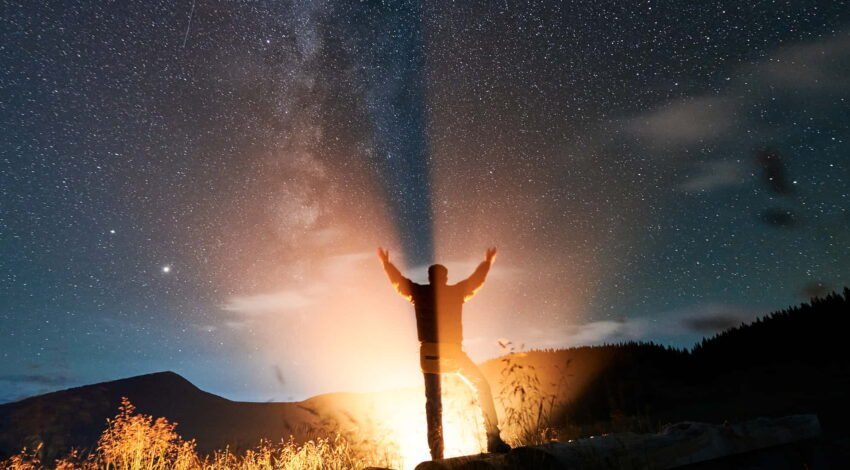
You Don’t Need a Sky Daddy to Feel Small Beneath the Stars.
Carl Sagan said it best:
“For small creatures such as we, the vastness is bearable only through love.”
When I look up at the night sky, I don’t see God.
I see galaxies. Time. Gravity.
I feel lucky to exist at all.
That’s awe.
And it doesn’t require a single hymn or prayer.
The Two Types of Awe
Psychologists often differentiate between two types of awe:
1. Awe of Ignorance
This is what religion often promotes:
- “I don’t understand how it works, therefore… God.”
- “Lightning is scary, so it must be divine.”
- “Consciousness is mysterious, so it must be a soul.”
This is the awe of confusion—it stops curiosity.
2. Awe of Understanding
This is what science and secular thinking promote:
- The more we learn, the more we’re amazed.
- DNA is more complex than any book.
- The universe is older and grander than we imagined.
“Science is not only compatible with spirituality; it is a profound source of spirituality.” — Carl Sagan
Awe grows with knowledge—not mystery.
Dawkins, Darwin, and the Real Miracle
“We are going to die, and that makes us the lucky ones.” — Richard Dawkins, Unweaving the Rainbow
That quote hits hard.
Why? Because it reframes existence.
Most organisms that could have existed… didn’t.
You and I exist. Briefly. Miraculously. Without a script.
That’s not bleak—it’s liberating.
As Richard Dawkins points out in The God Delusion:
“There is something infantile in the presumption that somebody else has a responsibility to give your life meaning.”
We make meaning. That’s our superpower.
Nature Doesn’t Need a Scriptwriter
Creationists often ask:
“How can you look at a flower and not believe in God?”
Flowers attract bees with UV patterns we can’t even see.
Birds sing complex songs, coded by tiny genetic instructions.
The eye evolved from a simple light-sensitive cell.
This isn’t random. It’s not magic. It’s natural selection—slow, beautiful, brutal, and mind-blowing.We don’t need to believe someone wrote the script. We’re watching the show unfold in real time.
Art, Love, and Music—Without God
Atheists laugh. Cry. Fall in love. Write poetry. Play Beethoven. Watch Interstellar and sob.
We aren’t empty.
We’re full of life—because we know it’s fleeting.
Love is deeper when you know there’s no afterlife.
Sunsets are brighter when you know there’s no rerun.
Moments are sacred because they’re finite.
That’s not hopeless. That’s powerful.
A Universe Without Purpose Can Still Be Meaningful
“The cosmos is within us. We are made of star-stuff.” — Carl Sagan
That’s not a metaphor. It’s literal science.
We are made of atoms forged in stars.
Isn’t that more beautiful than saying we’re made of clay?
More empowering than being told we were born sinners?
We aren’t here because someone wanted us here.
We’re here despite the odds—and that’s enough.
What About Morality? Doesn’t God Give Us Ethics?
Nope. Morality is a social construct, built by empathy and culture.
We’ve covered this deeply in this article and this video.
But in short:
- Morality predates religion.
- Most cultures agree on basic values (kindness, fairness, harm reduction).
- We act ethically not because of hell, but because of each other.
Atheists are not amoral. We’re accountable to people—not to an invisible judge.
Final Thoughts: Wonder Without Worship
Let’s end with this:
You don’t need faith to feel wonder.
You don’t need a deity to feel moved.
You don’t need dogma to feel deeply connected to something bigger.
You just need open eyes—and a mind willing to ask “why?”
“Those who dwell on the beauty of the earth find reserves of strength that will endure as long as life lasts.” — Rachel Carson